If you are choosing where to live on Cleveland’s west side, location matters just as much as the house itself. In North Olmsted, that location shapes how long you spend commuting, how easily you run errands, and how close you are to parks, trails, and the airport. If you want a clearer picture of what daily life here actually feels like, this guide will walk you through the practical details. Let’s dive in.
North Olmsted keeps daily travel manageable
North Olmsted covers 11.67 square miles and has a population of 31,690, which gives it a fairly compact suburban footprint. For homeowners, that often means key destinations are not spread too far apart.
The city’s mean commute time is 23.9 minutes, according to U.S. Census data. That is very close to Cuyahoga County’s 23.3-minute average, which suggests living in North Olmsted does not create a much heavier daily travel burden than the county overall.
For many buyers, that balance is a big part of the appeal. You get a suburban setting while still staying connected to major work, retail, and transportation corridors.
Commuting is shaped by freeway access
A major part of North Olmsted’s daily rhythm centers on access to I-480 and nearby regional routes. That makes the city especially practical if your routine includes driving to work, combining errands into one trip, or traveling across the west side.
The North Olmsted Park-N-Ride at 5575 Great Northern Boulevard sits at I-480 and serves as a commuter hub. The Greater Cleveland Regional Transit Authority identifies it as a commuter facility with direct freeway access, and the current 55, 55B, and 55C route family serves the location.
RTA also notes that the lot has 489 spaces, ADA access, bike racks, fare machines, and restrooms. Service is geared largely toward downtown commuters, with Monday through Friday rush-hour service, which points to a practical car-plus-transit pattern rather than a dense all-day transit lifestyle.
For homeowners, that setup can be useful if you want flexibility. You can drive when needed, but you also have a structured transit option tied to the same corridor many residents already use.
Airport access is part of everyday convenience
North Olmsted’s location also places Cleveland Hopkins International Airport within the same general daily geography. Great Northern Mall describes itself as about five minutes from the airport, and Cuyahoga County Planning notes that the mall area has access to both downtown Cleveland and Hopkins.
That proximity can matter more than people expect. If you travel often for work, pick up visiting family, or simply want easier regional access, being close to the airport can make routine planning much simpler.
Cleveland Hopkins also reports about 9,000 on-airport jobs. That means airport access is not only about travel convenience, but also about connection to a major regional employment center.
Great Northern shapes errands and shopping
For many homeowners, daily life in North Olmsted revolves around the Great Northern area. Instead of spreading shopping and routine stops across several communities, many needs can be handled within one concentrated retail zone.
Great Northern Mall is the city’s main retail anchor. Its official site describes it as a shopping, dining, and entertainment destination with 120 stores, anchor tenants including Dillard’s, Macy’s, JCPenney, and Dick’s Sporting Goods, plus a 10-screen Phoenix Theatre.
That concentration shows up clearly in the numbers. In 2022, North Olmsted recorded $2.01 billion in total retail sales, or $63,483 per capita, compared with $19,267 per capita for Cuyahoga County.
For a homeowner, the takeaway is simple: North Olmsted punches above its size when it comes to commerce. You are living in a place where errands, shopping, dining, and entertainment are closely tied to the same everyday corridors.
The mall area is evolving
The Great Northern area is not only important today. It is also a key part of how the city may function in the future.
Cuyahoga County Planning’s 2025 Mall Area Mixed-Use Overlay District describes the area as being reimagined into a denser, more walkable, transit-supportive community hub. The overlay allows apartments and townhomes and is intended to bring housing, employment, shopping, and public space together around the district.
That does not mean every part of North Olmsted suddenly becomes urban in feel. It does mean the city is planning for a future where more daily needs could be clustered even more tightly around one active area.
For buyers, this can be an important long-term factor. If you value convenience and want a location that may become more connected over time, that planning direction is worth noting.
Parks and trails add balance to suburban life
One of North Olmsted’s strongest location advantages is that retail access and transportation convenience do not come at the expense of outdoor space. The city sits close to major park resources that can become part of your weekly routine, not just an occasional outing.
Cleveland Metroparks says Rocky River Reservation spans North Olmsted and neighboring communities. Within the reservation, North Olmsted includes picnic areas such as Big Cedar Point, Little Cedar Point, and Maple Grove.
Bradley Woods Reservation is also located in North Olmsted and Westlake. Metroparks describes it as a swamp forest with hiking trails, walking paths, Bunns Lake, a monarch butterfly waystation, and more than two miles of hiking trails.
For homeowners, that combination matters. You can be near major shopping and freeway access while still having straightforward access to natural spaces for walking, quiet time, and outdoor recreation.
The local trail system supports short trips
North Olmsted also has its own useful local connection in the North Olmsted Walking and Bike Trail. County planners describe it as a three-mile paved, low-stress route that links neighborhoods to the school campus, branch library, Butternut Ridge Historic District, and Great Northern Mall.
That kind of trail can shape everyday life in small but meaningful ways. It creates a practical option for walking, biking, and connecting neighborhood destinations without always relying on a car.
County planners also state that the trail is expected to eventually connect to Rocky River Reservation. Over time, that could make local outdoor access feel even more integrated into daily routines.
Housing choices support different lifestyles
North Olmsted’s location would not matter as much if the housing stock were too limited. Instead, the city offers a range of residential formats that can match different needs and life stages.
According to the U.S. Census, 78.9% of housing units in North Olmsted are owner-occupied. The median owner value is $219,800, and the median monthly owner cost with a mortgage is $1,623.
Those numbers point to a city with a strong homeowner base. In a market like that, buyers often pay close attention to how a location supports long-term convenience and livability.
The city’s zoning code also defines several dwelling types, including single-family detached, single-family attached, two-family, multiple-family, and condominium dwellings. That means North Olmsted is set up for more than one type of homeowner lifestyle.
Home styles add visual variety
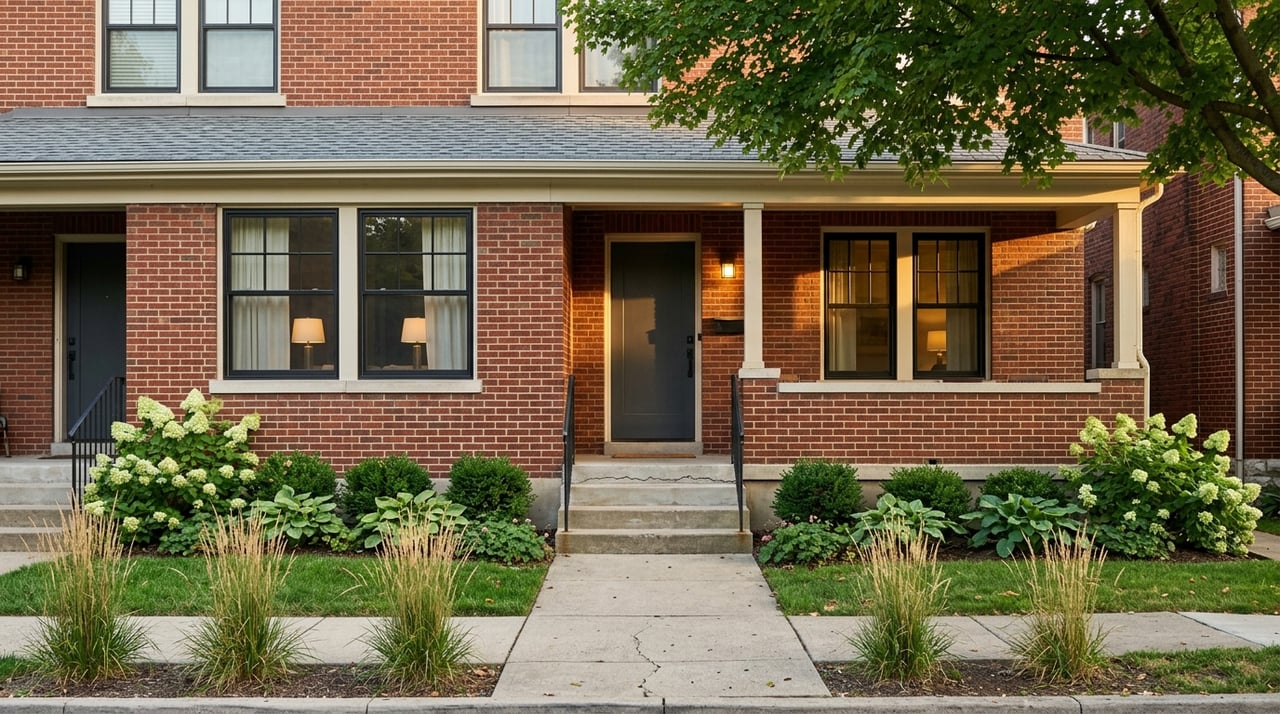
North Olmsted also offers notable variety in home style. In the Butternut Ridge Historic District, the city’s design guidelines identify styles and types such as Minimal Traditional, Ranch, Split Level, New England One and a Half, Upright and Wing, Gabled Ell, American Foursquare, and Bungalow.
That variety can be helpful if you are not looking for a one-style-fits-all suburb. Some buyers want a ranch or split level for ease of living, while others are drawn to older architectural character and established streetscapes.
From a real estate perspective, that gives North Olmsted broader appeal. You are not just choosing a location near conveniences. You are also choosing from a housing stock with enough range to support different goals.
What this means for homeowners
When you step back, North Olmsted’s location works through three main systems: commuter access, concentrated retail, and strong park and trail connections. Those systems overlap in a way that can make daily life feel efficient without giving up the benefits many buyers want from suburban living.
If you work downtown or elsewhere on the west side, freeway access and the park-and-ride can support your routine. If you value easy errands, the Great Northern corridor gives the city a commercial center that is unusually strong for its size.
If outdoor access matters to you, Rocky River Reservation, Bradley Woods, and the local walking and bike trail add a different layer of convenience. That blend is what makes North Olmsted stand out for many homeowners comparing west-side communities.
In practical terms, the address you choose here can shape how much driving you do, how quickly you handle everyday tasks, and how easily you fit recreation into your week. That is why location in North Olmsted is not just about the map. It is about how your home supports your day-to-day life.
If you are thinking about buying or selling in North Olmsted, local guidance can help you match the right home to the lifestyle you want. Connect with Iconic Partners Group for neighborhood insight, buyer support, seller guidance, and a smart plan built around your goals.
FAQs
How does North Olmsted’s location affect commuting for homeowners?
- North Olmsted’s 23.9-minute mean commute is close to the county average, and the city’s access to I-480 plus the North Olmsted Park-N-Ride supports practical driving and car-plus-transit routines.
What makes Great Northern important for daily life in North Olmsted?
- Great Northern concentrates shopping, dining, entertainment, and errands in one main area, which can reduce the need to travel across multiple communities for routine tasks.
How does North Olmsted offer access to parks and trails?
- Homeowners have access to Rocky River Reservation, Bradley Woods Reservation, and the three-mile North Olmsted Walking and Bike Trail, which links neighborhoods to several local destinations.
What types of homes can buyers find in North Olmsted?
- The city’s zoning allows single-family detached, single-family attached, two-family, multiple-family, and condominium dwellings, and local design guidance shows a range of styles from ranches and split levels to bungalows and foursquares.
Why does airport access matter for North Olmsted homeowners?
- Great Northern is about five minutes from Cleveland Hopkins International Airport, which can add convenience for travelers and for households connected to airport-area employment.