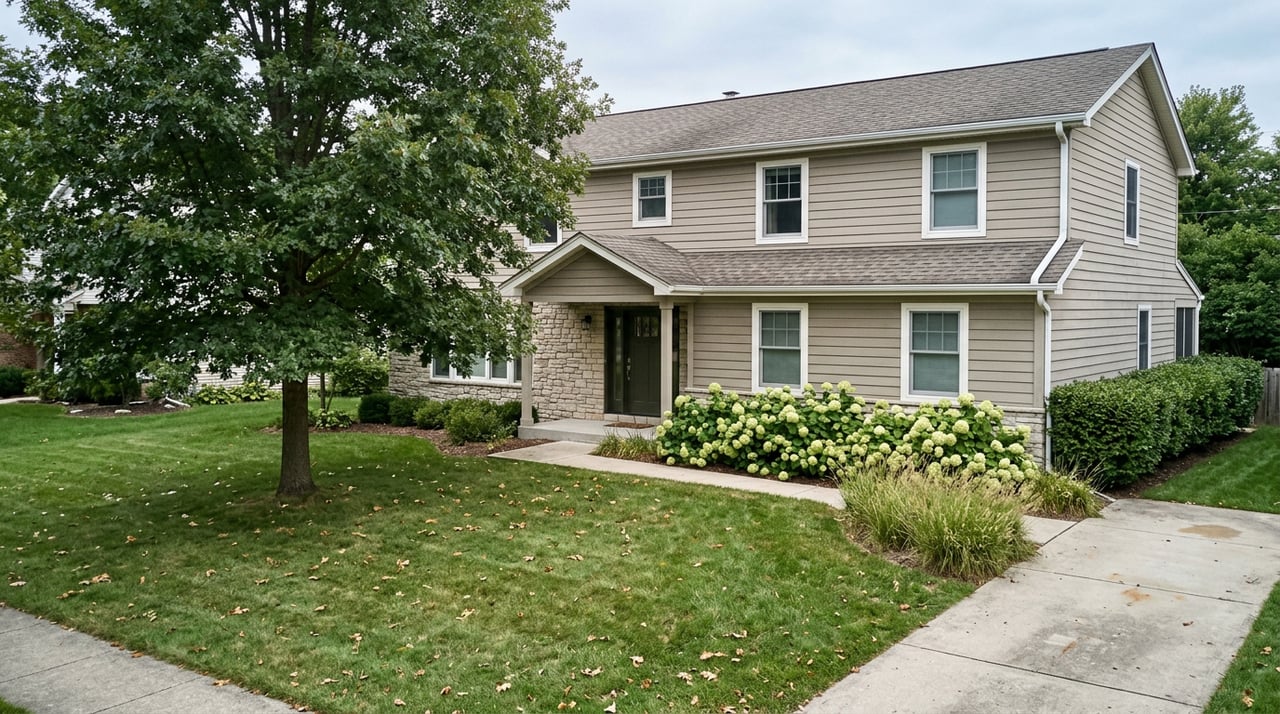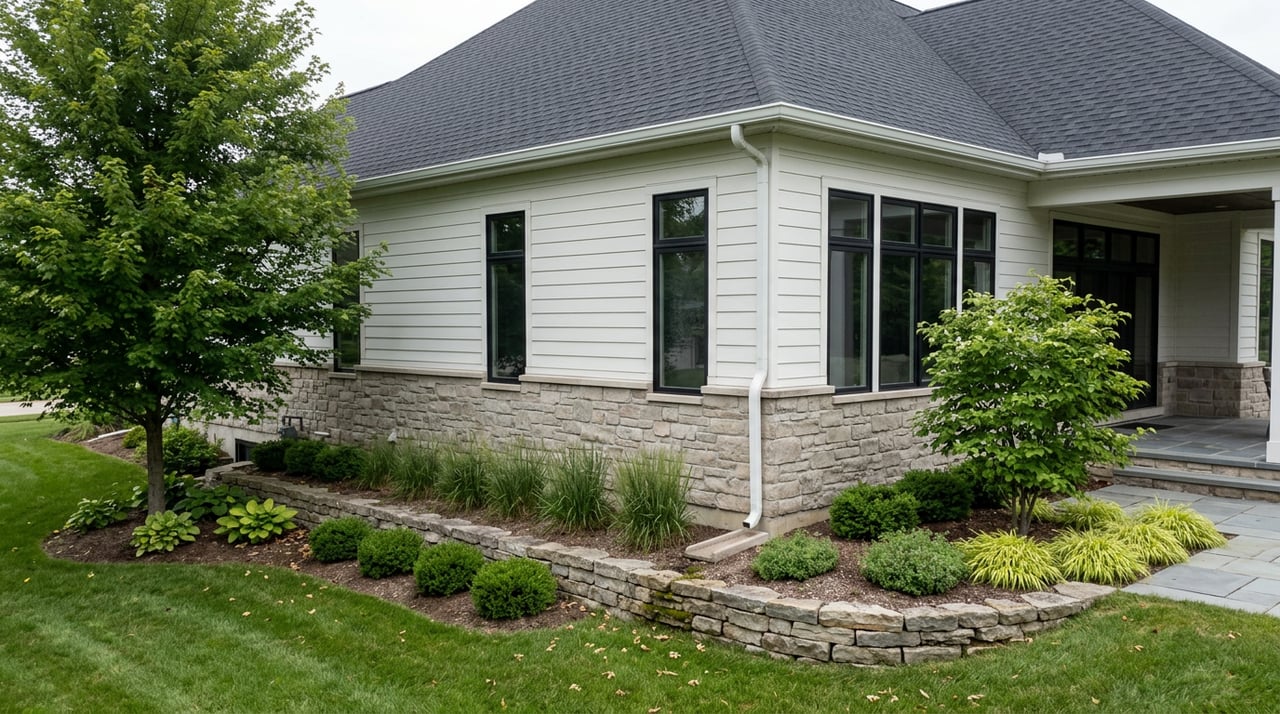
Every Ohio Residential Property Disclosure Form has a box for it: Coastal Erosion Area, yes or no. In Avon Lake, that single checkbox explains more about the local market than any median price a portal will hand you. Properties inside a designated Coastal Erosion Area must disclose it at sale, and the designation triggers a permit from the Ohio Department of Natural Resources before an owner can build new construction, install a septic system, or add 500 square feet or more to an existing structure. That is not a hypothetical for Avon Lake. It is a routine fact of owning the kind of home the city is known for.
Ask a buyer what Avon Lake homes sell for and they will usually repeat a single number pulled from a portal search. That number is not wrong, exactly. It is just describing two different products as if they were one, and the gap between them is the actual story.
Two Markets, One Average
Pull the numbers from August 2026 and the split becomes obvious. Active listings in Avon Lake were asking an average of $749,127. Homes that actually closed that month averaged $459,987. That is close to a $300,000 gap, and it is not a rounding error or a handful of outlier mansions skewing the math. It is what happens when a thin, slow-moving lakefront segment and a faster inland segment get folded into the same citywide figure.
| Segment | Average Price | Days to Close/Under Contract |
|---|---|---|
| Active listings (asking) | $749,127 | 62 days average |
| Homes under contract (pending) | $448,265 | 46 days to reach agreement |
| Homes closed | $459,987 | 57 days |
Recent closed sales averaged 2,497 square feet with 3.3 bedrooms, about 61 percent above Ohio's statewide median sale price of $285,000 as reported for mid-2026. Active listings, by contrast, average 3,172 square feet, nearly 800 square feet larger than what is actually closing. That size gap tracks the price gap almost exactly. The homes sitting on the market longest, at 62 days versus 46 for the pending cohort, are disproportionately the larger, lakefront and near-lakefront properties that define Avon Lake's reputation but don't move at the same pace as everything else.
If you are shopping the segment most buyers actually compete for, the 62-day active average and the $749,127 asking figure describe houses you are probably not bidding against. If you are shopping lakefront, that same "average" undersells how long you may need to wait, and how much negotiating room actually exists once your search narrows to homes with direct water access.
Why the Lakefront Segment Sits Longer
The erosion disclosure is not a footnote to that gap. It is a working part of the mechanism.
Lake Erie bluffs along this stretch of shoreline can reach sixty feet, and the erosion that shapes them happens in three distinct zones: the bluff itself, the shore where land meets water, and a nearshore zone extending out into the lake where erosion often goes unnoticed because it happens underwater. Homes sitting in a mapped Coastal Erosion Area carry that disclosure permanently, and any buyer doing real diligence on a lakefront listing will eventually ask what protecting that shoreline actually costs.
The honest answer, based on regional shoreline contractors who have repaired failing sheet pile walls and built armor rock revetments along Lake Road in Avon Lake, is that shoreline protection is a real, site-specific expense scaled to how much shoreline needs protecting and what condition it is already in, not a rounding error on a purchase price. Revetment permits through ODNR typically take one to two weeks once submitted, faster than many buyers expect, but the underlying construction cost and the disclosure itself are variables inland buyers never have to weigh at all.
That is the part a median price cannot show you. A lakefront listing at $749,000 and an inland listing at $449,000 are not different sizes of the same product. One of them comes with a regulatory designation, a disclosure obligation, and a maintenance budget line the other does not.
What the Redevelopment Down the Road Signals
There is a reason to watch this segment closely rather than treat it as static. The former Avon Lake Generating Plant, a 23-acre lakefront site demolished in 2022 after more than a century in operation, became the subject of active city planning earlier this year. As of March 2026, Avon Lake officials held a public meeting to gather resident input on what replaces it, with a public lakefront park, restaurants, multi-story housing, a hotel, and a marina all under consideration. Single-family homes, nursery schools, and day care centers were already ruled out for the site itself. Whether that planning has advanced further since is worth confirming with the city directly, but the direction it sets for the corridor is already on the table.
Whatever gets built there will sit directly on the same lakefront corridor where the erosion dynamics above apply, and a redevelopment of that scale tends to shift how buyers value the surrounding stretch of shoreline over time. It is not a reason to rush a decision. It is a reason to treat the lakefront segment as a market still being written, not a fixed number to compare against Bay Village or Westlake and call it done.
Reading the Numbers Correctly
None of this means Avon Lake's market is soft. Recent closings landed at 99.9 percent of list price on average, a difference of roughly $602 on a $460,000 home. There is essentially no systematic negotiating room once a home is priced correctly and listed in the segment where most transactions actually happen. The friction is not in the negotiation. It is upstream of it, in the disclosure paperwork and the maintenance math that only applies once you cross into lakefront inventory.
For a buyer comparing Avon Lake to Bay Village or Westlake, the useful question is not "what's the median here versus there." It's which segment of Avon Lake you are actually shopping, because the answer changes your timeline, your negotiating leverage, and your budget for what happens after closing.
Frequently Asked Questions
Does every home in Avon Lake require a Coastal Erosion Area disclosure? No. The CEA designation applies to specific mapped areas along the shoreline, not the entire city. Inland homes away from the bluff are typically unaffected. A property's CEA status can be checked against ODNR's coastal mapping tools before you write an offer.
Does a CEA designation mean a home can't be improved? No, but it does mean certain projects, including new construction, septic installation, or additions of 500 square feet or more, require a permit from ODNR before work begins. Smaller renovations that don't meet those thresholds typically don't trigger the same review.
Is the $749,127 average asking price a realistic starting point for a lakefront search? It's a reasonable ceiling reference, but treat it as a description of current inventory, not a target. It reflects a market where active listings sit an average of 62 days, longer than the 46 days pending homes took to go under contract, so pricing and timeline expectations should be set separately from the inland market.
Buying on the water in Avon Lake is a genuinely different transaction than buying two streets inland, and the difference shows up in paperwork most buyers never see until they're already under contract. If you're comparing what your budget actually buys across Avon Lake, Bay Village, and Westlake, Iconic Partners Group can walk you through the disclosure history and shoreline condition on specific listings before you write an offer. Start with a market snapshot for the street you're actually considering, not the citywide average.